The single most expensive mistake Singaporean parents make on their first snow trip is buying their child's ski jacket. The kid will wear it for a week, possibly enjoy it, and grow out of it before the next trip. The jacket then lives in a wardrobe in your HDB until you give it to a cousin or donate it. Cost per use: roughly S$60.
This guide is the under-12 packing playbook for Singaporean parents, written by people who've made all the mistakes already. It applies whether you're going to Niseko, Queenstown, Pyeongchang, Cardrona, the Australian Alps or anywhere else with snow and a ski school for kids.
Rule one: rent the outerwear, every time
For under-12s on a once-or-twice-a-year basis, renting beats buying on every metric:
- Cost. Roughly S$90/week for a child's jacket and pants combined, vs. S$300–500 to buy new. Even at three trips, you're ahead.
- Sizing. Kids grow 5–10cm a year. A jacket bought in March may not zip in December.
- Storage. No wardrobe space dedicated to clothing your child wears for 7 days a year.
- Quality. Specialist rental kits are typically better-spec'd than the family-priced retail options most parents land on.
- Hand-me-down theory. Yes, you might pass it to a sibling. In practice, two siblings rarely line up perfectly in size and season.
Rule two: prioritise mittens over gloves
For under-10s especially, mittens are warmer (less surface area for heat loss), easier to put on (one hole instead of five), and more forgiving when wet. Gloves with finger separations look more "grown up" but are objectively colder. Save the gloves for when your child is a confident skier holding poles.
Rule three: the sizing rule that prevents the day-one meltdown
Kids' ski jackets should be roomy enough for a fleece underneath plus a base layer, but not so roomy that wind funnels in at the cuffs. Pants should sit comfortably over the boot, with the snow gaiter (the elastic cuff inside the pant leg) snug against the boot — not over it.
The day-one meltdown comes from one of three things, every time:
- Cold hands — gloves too thin, no hand warmers, or kid took them off "for a second" and dropped one in the snow.
- Wet feet — boots not properly waterproof, or socks too thick and bunching at the toe.
- Too hot in ski school — over-layered, kid sweats, then gets cold on the chairlift.
The fix for all three: a kit that's sized correctly, with one less layer than you think you need, plus hand warmers in every glove pocket.
Kids fall a lot. Their gear gets wetter than yours. Plan for it.
The day plan, kid by kid
Toddlers (2-4)
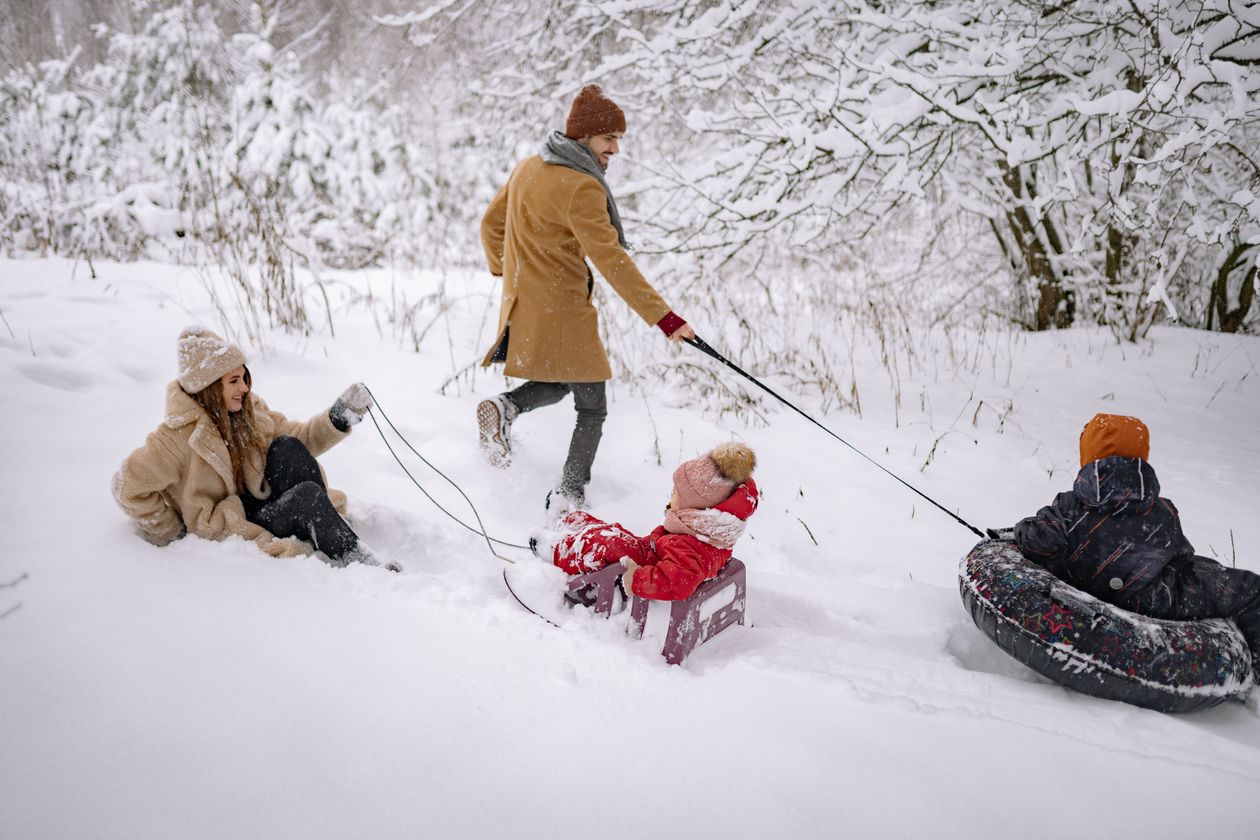
Honestly: a snow holiday with a toddler is more about photos than skiing. Most resorts won't take kids in lessons under 4. Plan for short bursts of snow play, lots of indoor time, and use a baby-carrier with a windbreaker over the top for outdoor walks. A weatherproof one-piece "snowsuit" rental is the right answer here, not separate jacket and pants.
Ages 4-7
Ski school territory. Half-day lessons are usually plenty for the first two days; build to full day by day three if they're loving it. Mittens, helmet (rented at resort), goggles, lots of snacks. Bring stickers — the lift queue waits are long.
Ages 8-12
Full-day lessons, real progression possible. Same kit principles as adults, just smaller. This is the age range where you can rent equipment locally without much fuss. They'll be skiing harder than you by day five.
Teenagers
Adult kit. Adult appetite. Adult ski-pass costs. Brace yourself.
The "what to skip" list
- Multiple ski jackets. One properly-spec'd jacket is enough for a 7-day trip.
- Cotton anything. Cotton long-sleeves as base layers, cotton hoodies as mid layers — both wrong, both common.
- Heavy "designer" snow jackets. They're not warmer; they're just heavier in the suitcase.
- Brand-new boots they've never worn. Break in any rented boots in Singapore for an evening before flying — let them feel the size, walk around the house. First-day blisters end ski school participation.
The hand warmer game
A 20-pack of disposable hand warmers from Daiso (Singapore) costs about S$5. They last 8 hours, can be tucked into mittens, boots, jacket pockets. They are the single highest-leverage item in a kids' snow kit. Use them.
Sleep, food, and the energy economy
Kids burn calories fast in cold weather. They will be tired by 3pm even on a half-day. The parental playbook:
- Big breakfast. Eggs, oats, fruit. Not just toast.
- Snacks in the jacket pocket — granola bars, dried fruit, nothing that freezes.
- Hot chocolate at every available opportunity. It's a calorie delivery system disguised as a treat.
- Plan a 4pm onsen / hot pool / pool time. They will sleep through dinner if you don't reset.
- Early night. Aim for 8:30pm bedtime even on holiday — they need it.
Travel logistics with a kids' kit
Renting from Singapore beats renting at the resort almost every time, but the airline luggage piece does require thought:
- One large check-in bag will hold a family of four's worth of snow clothing comfortably.
- Use compression cubes — ski jackets compress to half their visible size.
- Travel in your warmest layer if the destination connection has a cold layover (Tokyo, Seoul, Sydney).
- Snow boots: wear the bulkiest pair on the plane.
The bottom line
The maths on kids' winter clothing is unambiguous: rent. Not because budgets are tight (although they often are), but because rental sizing keeps pace with growth, the gear is better spec'd than mass-market retail, and you don't end up storing four ski jackets that don't fit anyone next year.
Mittens not gloves. Hand warmers in everything. Snacks in pockets. One less layer than you think. And book ski school before you book the flight.