The thing nobody tells Singaporeans about Seoul in December is the wind. The temperature on your phone says −5°C, which sounds manageable. The actual feel, walking from Anguk station to Bukchon Hanok Village with the wind funnelling down a gap between two old buildings, is closer to −12°C. By dinner you've stopped feeling your fingers and you're plotting your retreat into the nearest convenience store for a hot pack.
This guide is for the trip Singaporeans actually take: 5 to 10 days in Seoul, mid-December to mid-January, walking 15,000 to 20,000 steps a day between cafés, palaces, museums, the Han River, Namsan Tower, Myeongdong shopping, and probably one cold-night Hongdae bar crawl. Not skiing. Not Pyeongchang. Just city.
The honest weather
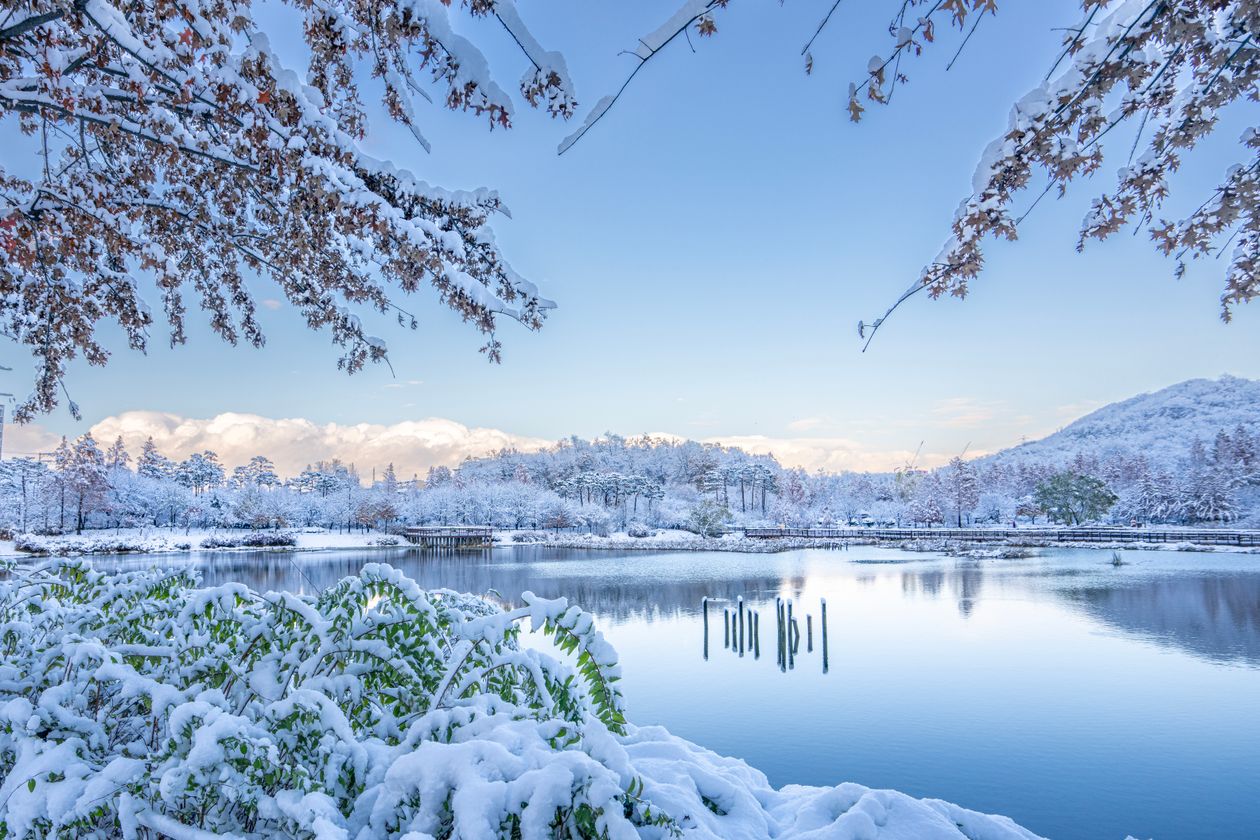
Seoul averages a daytime high of 3°C and an overnight low of −5°C in December. January is statistically the coldest month, with daytime highs of 1°C and nighttime lows of −7°C. The wind chill on a typical December afternoon takes those numbers down by another 3–5°C. Snow is occasional — usually two or three light falls in December — and tends to melt within 24 hours in the city.
What this means for clothing: dry cold, persistent wind, big day-to-night swings, and a lot of indoor-outdoor transitions. The challenge isn't surviving a single −10°C moment; it's surviving 15 transitions a day between heated subway cars and freezing pavements without sweating into your shirt.
The layering rule for cold cities (not ski slopes)
Seoul is fundamentally a walking-and-eating city. Your packing puzzle is different from a ski trip, where you're either fully suited up or fully indoors. Here you're constantly moving between climates: 22°C subway, −5°C street, 24°C café, 3°C palace courtyard, 26°C department store, 1°C night-market alley.
The system that works:
- Base: A light merino or Heattech-style top. Just one. You don't need a thermal bottom unless temperatures drop under −8°C.
- Mid: A regular jumper or sweatshirt. Whatever you'd wear in an aircon office.
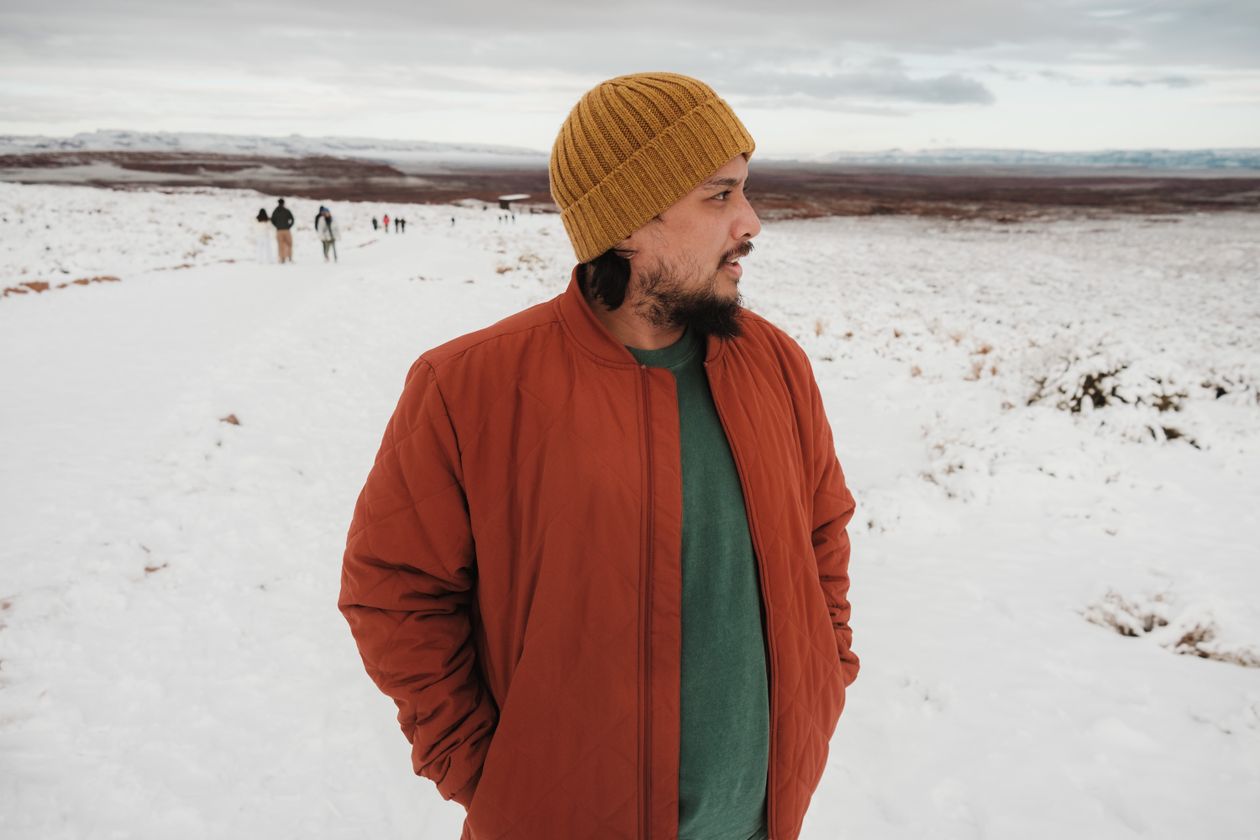
- Outer: A wind-rated insulated jacket — this is the key piece — that you can fully unzip in 10 seconds when you walk into a café.
Seoul doesn't punish you for under-dressing. It punishes you for over-dressing and then sweating.
The jacket question
The single most useful purchase or rental for Seoul is a knee-length, wind-rated insulated parka with a hood. The Korean locals call this "long padding" (롱패딩) and you'll see absolutely everyone wearing one — old, young, kids in school uniform, taxi drivers, idols on billboards. There's a reason. The knee length blocks wind from your trouser line and keeps your thighs warm; the hood blocks wind from the back of your neck.
You do not need to spend S$1,500 on a Moncler. A mid-priced rented or bought parka with 600+ fill power down (or 80g/m² synthetic equivalent) is the spec. Fit matters more than brand: roomy enough to layer a jumper underneath, snug enough at the cuffs that wind doesn't get up your sleeves.
The trouser problem
Most Singaporeans pack jeans for Seoul. Jeans are fine on a 5°C afternoon. They become a punishment at −5°C with wind. Two solutions:
- Light thermal under your jeans — a merino bottom layer adds essentially zero bulk and you can wear them all week. This is the cheapest solution.
- Insulated trousers — wool, fleece-lined or technical fabric. Worth renting if you run cold or are going for more than 7 days.
Either way, do not wear shorts on the assumption that your hotel will be warm and you'll cab everywhere. You will end up walking.
Footwear
The number one mistake we see: ankle boots without grip. Seoul pavements ice over in late December and the ramps to the older subway exits become slides. You don't need full snow boots — you need waterproof, insulated boots with a real rubber lug sole. A pair of Timberlands, Columbia Newtons, or any equivalent will be fine. Avoid suede, avoid leather soles.
Bring two pairs. A long city day in cold-wet boots is unpleasant; rotating gives a pair time to dry.
The accessory pieces that punch above their weight
- Wool beanie. 30% of body heat does not actually escape through your head — that's a myth — but it's still the cheapest warmth upgrade per gram of luggage.
- Neck gaiter or scarf. Block wind at the collarbone and you'll feel several degrees warmer.
- Touchscreen gloves. You will be on KakaoMap and Naver Maps constantly.
- Hand warmers. 핫팩 (hot packs) are sold in every CU and 7-Eleven for ~₩1,000 each. Buy a 5-pack on day one and tuck them into pockets.
Trip-day breakdowns
Palace days (Gyeongbokgung, Bukchon, Insadong)
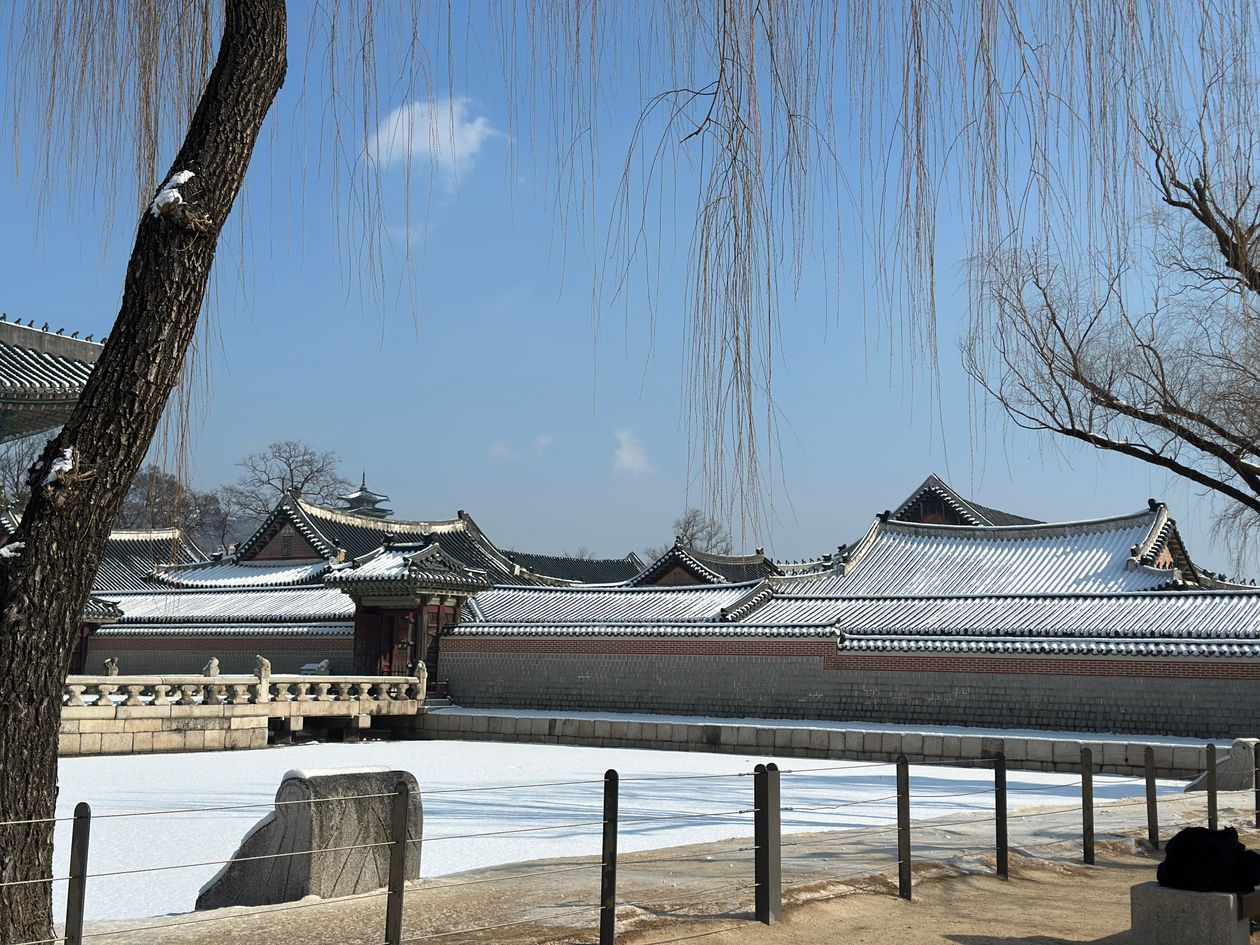
Lots of standing around courtyards in the wind. Full kit: base + jumper + parka, beanie, gloves, neck gaiter. Wear the hanbok rental if you want — it's traditionally cotton-lined and surprisingly warm — but keep your parka on top.
Café and shopping days (Seongsu, Garosugil, Hongdae)
Lots of indoor-outdoor switching. The unzippable parka does the work. Skip the thermal bottom, you'll roast in stores.
River walk and Namsan Tower at sunset
The wind off the Han River and the open observation deck at Namsan are the coldest moments of the trip. Full layering, wear hand warmers in your gloves.
Day trip to a ski resort or Nami Island
Add the merino bottom layer, swap to wool socks, take the bigger gloves.
What you can buy in Seoul (and probably shouldn't)
Yes, Korean fashion is great, the long padding is a national art form, and you'll be tempted. Quick reality check:
- Sizing is small. Singaporean L often equals Korean XL or XXL.
- Prices are not cheaper than Singapore once you factor in tax (you can claim VAT back, but the queue at Incheon is brutal).
- You'll have to fly home in it, taking up half a check-in case.
Buy the Korean parka if you genuinely love it as a fashion piece. Don't buy it as a "save money" move.
Packing list (TL;DR)
- 1× wind-rated insulated parka (rented)
- 1× insulated trousers OR 1× merino bottom layer to wear under jeans
- 2× merino top base layers
- 2× regular jumpers
- 3 pairs warm socks
- 2× pairs waterproof boots with grip
- Beanie + neck gaiter + touchscreen gloves
- Hand warmers (top up at any convenience store)
- Lip balm, hand cream, electrolyte sachets (the wind dehydrates more than you think)
The bottom line
Seoul in December rewards layering you can adjust on the fly. One serious wind-rated parka, one base layer system, sensible trousers, real boots, and the small accessories. You don't need ski gear. You don't need a $1,500 jacket. You need a system you can zip and unzip 30 times a day without thinking about it.
And buy a hot pack. Just buy a hot pack.